NAIA President & CEO Jim Carr Represents Small Colleges in U.S. Senate Roundtable on College Athletics Reform
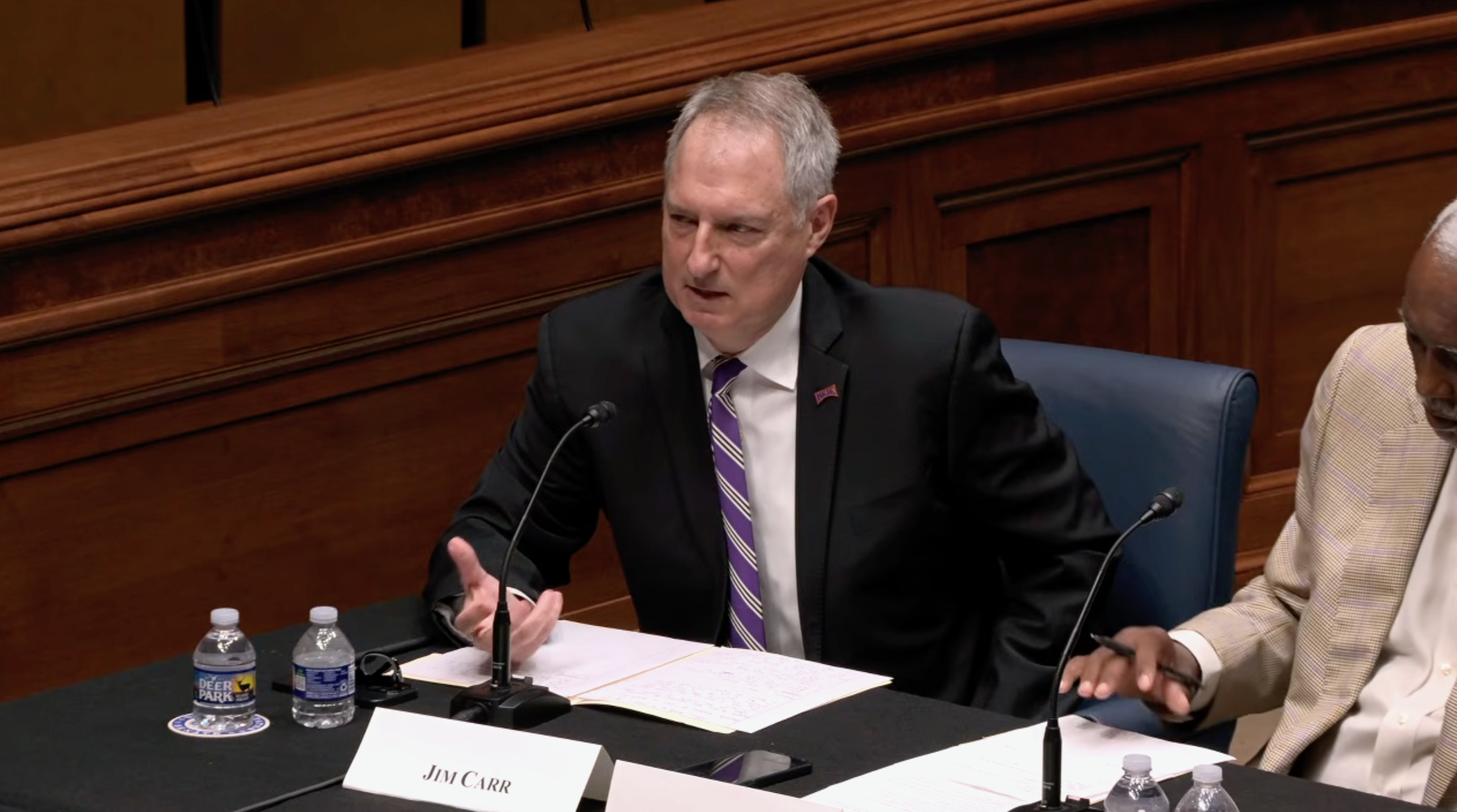
WASHINGTON, D.C. – Jim Carr, President and CEO of the National Association of Intercollegiate Athletics, participated in a roundtable discussion hosted by Senator Bill Cassidy, Chairman of the U.S. Senate Health, Education, Labor, and Pensions Committee, March 10 in Washington, D.C. The discussion focused on potential reforms to labor and education implications in collegiate athletics, aimed at protecting student-athletes and ensuring they have opportunities to succeed.
“Collegiate athletics reform remains a hot topic on Capitol Hill, and I’m grateful for the chance to advocate for the unique perspective of small colleges,” Carr said. “As we navigate the ongoing conversations surrounding NCAA Division I schools, it is critical that we proactively safeguard against any potential repercussions that could impact our smaller institutions.”
Carr joined a panel of leaders from across the collegiate athletics landscape as part of Chairman Cassidy’s ongoing efforts to examine issues impacting student-athletes nationwide and explore ways Congress can address labor and education implications in the evolving college sports environment.
He noted that the economics of athletics are different at smaller institutions than at the NCAA Division I level. According to Carr, at an average NAIA institution, 36% of enrolled students are student-athletes.
"This applies to Division II, III, NJCAA, and many schools in Division I outside of the Power 4 level. The economics are different,” Carr said. “Only 4% of NAIA schools’ student-athletes are receiving full scholarships. As these discussions are happening at the highest level, allowing it to trickle down will impact many of the great things that are happening at our levels.”
Carr also clarified that Name, Image, and Likeness does not bring in a significant amount of money for NAIA institutions, and the money that is made generally goes from the third party directly to the student-athlete, often offsetting the cost of the student-athlete's education.
Finally, Carr explained that the current athletic model, which does not classify student-athletes as institutional employees, is working well for small colleges.
"Implications of student-athletes becoming employees or other core decisions being considered would make it difficult to enforce our rules on what we call education-based athletics,” Carr said. “The education-based model is critical to NAIA institutions staying in business for the long term."
Additional roundtable participants included Collis Temple, former LSU basketball standout and LSU Athletics Hall of Fame inductee; Julie Cromer, Executive Deputy Athletic Director and Chief Operating Officer at LSU Athletics; Emily Surcey, former student-athlete and development officer with Samford University Athletics; and Bernard Dennis III, Principal at Jackson Lewis PC.