
Podcast Episode 002
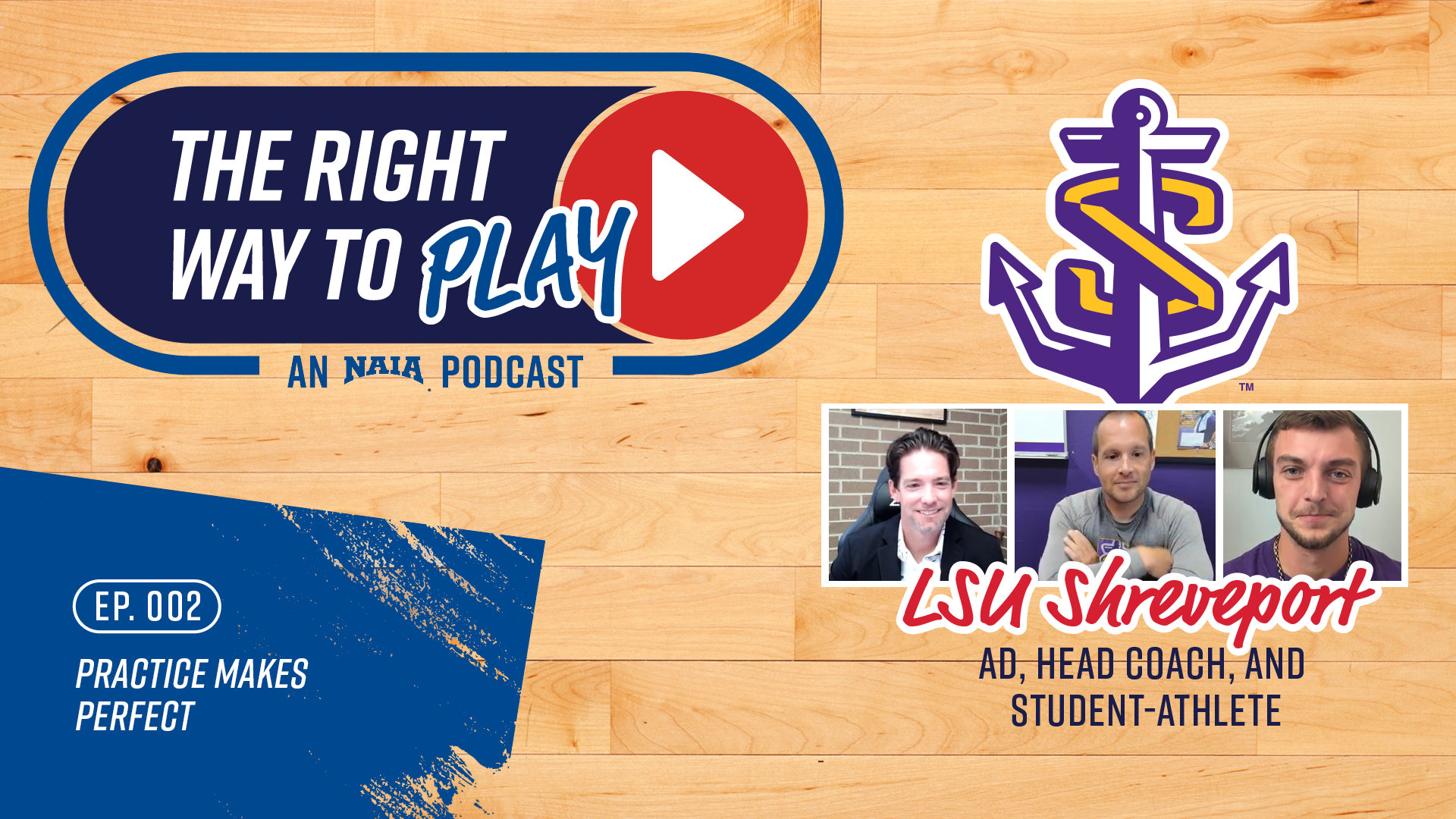
Practice Makes Perfect
This episode of The Right Way to Play Podcast goes inside LSU Shreveport Baseball’s historic, undefeated season. Hosts Alan Grosbach and Austin Bennett sit down with Head Coach Brad Neffendorf, standout pitcher Issac Rohde, the 2025 NAIA Pitcher of the Year, and Athletic Director Lucas Morgan to talk about the mindset, culture, and character that fueled a perfect run. From dugout stories to leadership lessons and what it takes to embody The Right Way to Play, this is a can’t-miss look at one of the most remarkable seasons in NAIA baseball history .
Alan: Welcome to the Right Way to Play podcast. This is where we go beyond the school board to explore college athletics the way it was meant to be. Each episode, we sit down with coaches, athletic directors, student athletes, and thought leaders to talk about building champions on and off the field, fostering community through competition, and leading with common sense. Whether you're an NEI member institution or just passionate about the future of college sports, you'll find inspiration and insights right here.
Austin: Man, I tell you what, I'm so excited. History was made last school year, last May, and now we get to talk about it, celebrate it, hear some inside stories. I'm so excited for this episode and looking forward to diving in with our friends down at LSU Shreveport.
Alan: I agree. I think we've got a great show today, But first, let's kick it off a little segment we're calling Red Banner Rundown. This is where Austin and I share some quick hits from around the association, talk about big plays, cool stories, cool stats. Austin, you want to start us off?
Austin: We're right in the middle of conference play across our fall sports of football, women's volleyball, men's women's soccer, cross country. And so things are heating up. We're about a month away from finding out who's going to start their battle for the red banner and that journey to a national championship and our fall championships. And one of the cool things when we were looking up some little nuggets for this was they're currently across all fall sports, 14 truly undefeated teams still at this point, which is exciting since we're over six, you know, a month and a half, six weeks into the season.
Alan: And most importantly is my McPherson College Bulldogs, their football team is undefeated this week, got a big game. Obviously at the time of this recording, they got a big game with friends coming this weekend. Head coach, Jeremiah Fiskis, who used to live across the hall from me when I was a student at McPherson, has got them rolling and it's super exciting. And obviously there's a whole bunch of other teams that are playing really, really well, which obviously fits well in this episode because we're talking unbeaten teams.
Austin: Absolutely. And tell us about University of Cumberland's Kentucky women's volleyball team.
Alan: Yeah, University of Cumberland's women's volleyball. They are 18 and 0, and they have only dropped three sets all season. They're just, they're playing really, really well right now. So a lot of good things coming. You can tell that championship season is starting to heat up, which is exciting. And like you said, we're just a handful of weeks away from getting it going.
Austin: Well, good deal. Well, let's learn about today's guest, Alan. There are two leaders that help orchestrate one of the greatest seasons in college baseball history. First, athletic director Lucas Morgan, who has guided LSU Shreveport Athletics through remarkable growth and continues to build a culture where character and competition go hand in hand. He's been named the NAACDA NAI Athletic Director of the Year, three-time winner of the Red River Athletic Conference AD of the Year. He serves as the first vice president on the NAIA ADA Board of Directors, and he's helped shape LSUS into a NAI Champions of Character five-star institution. Alongside him is coach Brad Neffendorf, the architect, the leader, the pilot of the pilots, if you will, in their historic 59-0 undefeated season in 2025, making the LSUS the first team in college baseball history to finish a perfect season. He's six seasons down in Shreveport thus far with an incredible 270 and 49 record, three World Series appearances, three-time Conference Coach of the Year. I lost count coach to be honest on how many coaches here's in 20, 25 you won, it's just about every publication out there, including all of them. Let's welcome Lucas Morgan and coach Brad Neffendorf to the show.
Lucas: Thanks guys, appreciate you having us on. It's exciting to be here. Of course you made us follow the great Jim Carr. Not sure how that's fair to us to have to follow somebody like that. We appreciate the intro and certainly I'm excited to join you guys today.
Austin: Well, good deal. let's jump right in. Coach and Lucas, tell us about the experience. Obviously you went undefeated, 59 and 0, and you won the World Series. All the things that go with it. Talk to us about the awards, the invite to the White House, walks of fame. How's life been the last handful of months since setting such a historic mark?
Coach: It's been good and obviously very rewarding. know, rewarding for the players. think that's, you know, first and foremost, that's what's most important to us. It's also been a time where, you know, we had to get right back on it in regards to recruiting because we lost a lot, had to bring a lot in. I think we got 27 new players. So the fall has been a little bit different. I mean, obviously it's a very talented group. It's a new group and obviously some things reset. We're looking forward to it and obviously building off what we've done and, you years of success here. And obviously, I think I said last year, it's one of the most historic programs at this level that...if not won a national title, but that's because it's that tough. So obviously, you you put on top of what we were able to do and the way that we did it, you know, it's, it's, you know, we're waiting for the program for so many years and all the people that were involved with it. It's been good so far.
Lucas: Yeah, it's been pretty crazy. know Brad became a national celebrity, definitely became a celebrity in Shreveport. I know we had several conversations about the experiences and all the requests for interviews and appearances and all those things. It's been pretty exciting to be a part of that here. Shreveport definitely needed something positive that was happening with what the guys achieved and what coach and his staff was able to achieve here. I think it's been something that the city's really been able to embrace and to be excited about.
Alan: That's awesome. Coach, let's go back in time. Obviously, you've been coaching for quite a while. Baseball seasons are long. I think last year you played, like, if I did some napkin math correctly, you played almost 60 games in, 120 days. How do you keep a group of guys motivated throughout a season, you know, one when you're having so much success? And at what point, kind of two-parter here, at what point did you realize this team was kind of this level special, like a World Series-winning team?
Coach: First off, it was a group that was self-motivated. You got to give credit where credit's due, and I think these players deserve an unbelievable amount of it. We had very few reminders last year. Practices were great. There was good intent. There was good focus. Very poised group. You know, I think we knew from the beginning of the fall that we were going to be good. How good, you know, obviously, time tells when somebody in the other dugout's in a uniform against you.
We just kept getting better and that's the thing about it. You nobody really paid attention to the no losses. Obviously there's a lot of noise about that. You're about 30 games in and more fans start showing up. When we got around 40, we caught in there like, hey man, there's a chance that, you know, and we're continuing to keep getting better while everybody else is getting better. And that's the thing, you know, we had a term this last year, garden against the unknown. And how we flipped that and used it was the unknown is while we're continuing to get better.
And everybody else is, you have no idea how the game of baseball is going to show up against you that day. Because ultimately that's what we're playing against. You know, our guys, the level of focus that they maintain, you they were very poised in game, very poised in practice. Just their level of intent and their focus on a daily basis was the most impressive thing to me. But there was a lot of returners that came back from two years in a row losing by a run, you know, three years ago, we lost by a pitch. We had one pitch to go, one strike to go. We were going to go back for the third year in row. So was a lot that came back with, you know, the right reasons to come back.
that when you granted and put in the COVID years, they didn't have to. I mean, they've been playing for a while. So we set an expectation and we have a standard, but these guys upheld it like there's no tomorrow. And they raised the expectation and the standard here on campus, within athletics and our baseball program by how they did things. And just the level of work that they put in last year was, we had such inside accountability and leadership that can be hard to find anymore. I think that led to us being able to continue to just get better and stick to who we were, till that last pitch of the year in Lewiston.
Alan: I think what's really incredible is when you think about baseball, there's so many micro moments within a game that can change the direction. A ball hits a rock or a pitch hangs out over the plate or something. And to go undefeated, it's such an incredible accomplishment for you and your guys. It's insane. I was actually talking to another NAI baseball coach and I was asking when you got to the World Series, was like, is LSU Shreveport do so well? And his response was everything. They do everything above average or better. Like there is, there's, there isn't a weak spot. And think that's real testament to you and your program and the way you approach it.
Lucas: So Alan, here's kind of funny to piggyback a little bit off that. So I'm sitting at convention last year and sitting next to one of the ADs who I'm really good friends with. And we had actually just played them a couple of weeks ago. And he's like, hey, I got something to tell you. And I'm like, OK, what did we do? But he's like, our coach came to me after the game. He started sending me texts. And he said, one of the things about our baseball team, and he said, I want you to tell your coaches. He said, yes, you guys are very talented, said, but the one thing that is different about you guys that's so that nobody else in the country is doing is that you do things the right way. It's like your guys run on and off the field. They focus on what they're doing. They do their job. It's not about the individual accolades. It's about what you guys do as a team and the support that they have among each other. And he starts sending me or showing me these texts from his coach. And it's just continually talking about all the things unrelated to baseball that these guys do in the way that they show up and they do their job every day. And I think that's what Brad has done such a good job with with his program is creating that culture. From the day that they get here, here's the standard that we're going to have. Here's the way that we're going to do things. We're going to focus on the team. We're not going to focus on the individual accolades. And obviously, it translated into historic season that they were able to achieve this year.
Austin: So coach, maybe dive in a little bit more to you've been obviously six seasons. I know the first was a COVID year, so cut a little bit short, but obviously every coach has their philosophies, their principles, you know, things like that to kind of guide their team, but maybe talk about what you've instilled from the start of your time in Shreveport to that. Maybe those you talked about those upperclassmen that have taken and really kind of carried that flag forward for you and what that's done for maybe setting up the next group who are freshmen and sophomore on the World Series team now taking their turn at leading the program.
Coach: I think the thing is, know, each and every year when we meet in the fall, you know, we've got a roster and what we're trying to get them to understand is that roster has got to become a team. And, you know, within doing that, think, you know, Lucas brought up one of the biggest things about our team last year is we became a team quick because nobody ever talked about individual this, individual that, nobody cared about the awards. They cared about truly being together and playing together. And, you know, when you got that with an upper level amount of talent, I think things can come together quickly. Obviously, it's you're trying to put a format together where you have a culture and however many you have returned the next year can continue to bring that thing forward and instill it right away. you know, when you look at this year, we've got, we're double the amount of new to returners and we fought it a little bit, not in a negative way, but trying to get everybody to understand. I think the biggest deal is we got to understand that we're trying to put these guys in a position from the coaches on down to players to be the best version of ourselves on and off the field, in the classroom and everything that we do. And it's pretty simple to me. I think the school board takes care of itself. You know, if we don't focus on that, we focus on the things that we need to and we have an expectation, we have a standard and those are non-negotiables, those things aren't going to change. You know, we're there, we obviously, we got a style that we want to play and that can be rough trying to get that, you know, instilled and coming together and your goal is have that to come together by the end of the fall with the time that we get out here. So, you know, we try to have a why for everything that we do. So it's almost like we've presented the why before they even ask, why are we doing this or whatnot? And we continue to enforce that why in everything that we do. And obviously there's things that we do that we can't even explain, things that we say, things that we do in practice, things that how we relate, things that, you know, just go together, all together to hopefully form this thing that we can't explain how we do it. But the one thing I can't explain is we're trying to break habits with these guys. Even us as coaches have habits that we've got to break that can get in the middle of what we're trying to do. And ultimately put these guys in a position that when they leave this program. They're in position to have success in anything that they do. And that can be rough for times. It can be rough for all of us, but it's learning, it's growth. And I think the biggest deal that I just talked about expectation is standard. trying to get them to break some habits that are in the way of them being the best version of themselves on a daily basis in anything that they do.
Austin: I love that. That's so good and so important. And Lucas, turn to you here for this one. Your athletic department has had success across multiple programs. think your basketball programs both on the men's women's side, soccer, they've all kind of taken their turns at really kind of highlighting what's going on on campus. How do you approach hiring coaches, building a culture across multiple sports programs, not even just baseball's got this one, they've got this one, but kind of how they all come together under that LSUS brand.
Lucas: Yeah, so I think culture is maybe one of the challenges that sometimes we all face in the athletic department is how do we build those things? And I think, you know, with Brad sitting right here, I think he's one of the best people that I've probably been around about establishing a culture. And, you know, when you think about growth, growth doesn't happen in your comfort zone. You've got to be able to step outside your comfort zone to be able to do that. And I think what Brad has done with his team that I've also tried to do with our athletic department is what is that standard?
How do you work together as a department to be able to create that culture, to be able to create that standard, your non-negotiables and really figure out what are we trying to achieve as a group? Obviously with their 59-0 season, they were able to do that. So when we look at coaches through the hiring process, we don't really focus on the X and O's. I know if you're a good coach, I I wouldn't be talking to you if I didn't think that you could go coach the game. But what we really look at is how do you fit into our team?
Are you a part of our family? Because when we look at our athletic department, we really focus on a family environment. It's coaches supporting each other. It's those guys being in communication with each other. I really truly feel like when these guys leave the walls of our athletic department, they're friends. When you look at it from the very bare minimum of trying to achieve something, you've got to start with your why, as Brad said. So what we really try to do in our athletic department is work directly with our coaches and our administration to create the why.
What are we trying to achieve? What standards are we setting? How do we give our student athletes the ability to be able to be successful once they leave this place? So I think originally you got to start with that, but then it's the coaches being able to take that to their practices and being able to demonstrate that on a daily basis, which I think they're doing a great job of doing. I think it also, you've really got to look at when you try to hire new coaches, it's trying to hire those hungry ones with the energy and the enthusiasm to really be able to go from day one and to push you to be better.
We aren't looking for a bunch of yes people in our athletic department. I think that's sometimes where it challenges as you're a leader of a department is you don't always maybe want to hear the things that you aren't doing well. But I feel like we've got coaches that are very interested in trying to continue to develop their program. that also starts with us as the administration is being able to sometimes take those conversations that maybe sting a little bit and go, OK, I need to take a look in the mirror. How can I do these things better?
So I really feel like we've got a good staff that's been able to really establish that with ourselves. At the end of the day, it's really trying to figure out what's the most important to you. And I think we've done that in our program and then a good job trying to develop.
Austin: No doubt. Yes, you have.
Alan: Yeah, that's awesome. I want to transition it for a second because I'm really excited that here in a minute we're going to have coach one of your star players join the podcast and Isaac Rody. Tell us a little bit about like what makes him special and what motivates him from your perspective.
Coach: You take a look at him in general and watch him pitch. Obviously, he's got some different arm slots and some different things that he does, but what he's done extremely well over his career and developed into is somebody that understood who he was and how he had to go about what he needed to do to be successful to get both sides of the plate at. You know, I've had the chance to now of course with him being named the NAI national player of year, had the NAI national pitcher, my bad pitcher of year in 2016 and a guy named Ryan Hart and they had a short stint in the big leagues with the Astros and then Isaac. Completely different animals. Isaac's probably the best that I've ever coached and I think that truly from that is he just continued to get better. And what I will say is, and I want this to come out the right way. There's no ego there, but there's some arrogance and it's a good arrogance. It's the arrogance that...
Even during an outing where maybe he doesn't feel his best or he doesn't have his best or maybe it doesn't matter. It's one of those deals where not many can tell other than the coaches that are around and maybe the players that see him on a daily basis. I think one of the stats that we showed is, know, No bais on balls in the World Series in 16 16 and he rebounds extremely well. He's got four different pitches that become eight different pitches with how he throws them to two different sides of the plate and he floods the zone and he works at an unbelievable tempo and he just number one he understands who he is and what he has to do to be successful. Just the pace that he works at. The thing about him is in order to be successful about him you have to slow the game down and you have to see him up in the zone and nobody did that.
And that's what made him so tough. And obviously he's gone on and he's playing independent ball in the frontier league and was extremely successful with them. And I'm proud of him because, you he had a year that was unbelievable for us the year before and pitched in that last game where we lost and pitched in the first game where we lost two of his three losses, think on the year were in the regional. When he came back and he continued to grow and he continued to get better and was a guy that we didn't know if we were going to get back until about two weeks before.
And if we didn't have him back, we wouldn't have done what we did. I mean, I can sit here and tell you, there's no chance we would have done what we did. But he's probably had the most historical two-year career here. He's probably the best that I've ever coached. He's irreplaceable in many ways. And that's not just, is a guy that went out and started for us 16 times or whatever it was. It's who he is as well. Very supportive family. And when you have that type of support and that type of drive that he had, it put him in position to continue to keep getting better and better and better. And we always talk to our players here about elevating everybody around you. And when you can elevate everybody else around you and put everybody else before you, everybody else is going to get better. And that's what Isaac did. And he did it so well. And we might feel the pain a little bit this year, not having the ability to roll him out every Friday. And obviously you're going to have some surprises. And then we'll have somebody that'll surprise us. But what he did and how he did it, truly, I want the word to be brought in the right way. He had a little bit of self-arrogance about him.
And that's a good arrogance. It's an arrogance that, know, they can't beat me. I can be weak, but they can't beat me. And it allowed him to do the things that he did. He was incredible in every way possible. And he's come back and visit already, but we truly miss having him out there on that panel with us every day.
Alan: Yeah, watching him pitch in the World Series, kept thinking like, cool is the rule. Like this kid doesn't know anything else but confidence. Like he just, he towed the mound with confidence and nothing was going to change that. And that, that was, that's extremely impressive from a fan's perspective.
Austin: Yeah, well, just a couple of quick hitters on on Isaac dominated the mounted LSU Shreveport going 15 and 0 this past year with a 224 ERA 135 strikeouts in just 11 walks over 112 innings this season.
You talk about those kind of fluky baseball things, Alan, that something's got to happen at some point, you know, an umpire missing a call, whatever. I think you'd have more than 11 walks that earned him the title of the 2025 NAI and perfect game pitcher of the year for the second straight season. He's a two-time first team All-American, a national champion with the pilots. And now he's taken his talents to the professional ranks, signing with the New York Boulders of the Frontier League from Rice Lake, Wisconsin to the top of the NAI and beyond. Welcome Isaac Rode.
Isaac: How are doing guys? I'm good. I'm enjoying life right now. Having a little off season for the first time in a while.
Alan: Appreciate you taking some time with us today to talk a little bit of baseball and talk a little bit about a really special season. And Isaac, you're from a town of about 10,000 in Northwest Wisconsin, probably not a place where people would traditionally think baseball, but you did it and you made it and that's incredible. And I'm just curious, like it's the last game of the World Series, it's the ninth inning. You've not traditionally been a relief pitcher during the season, you primarily started. You get on the mound against Southeastern, a team that...you pitched really well against earlier in the series. Like what's going through your mind as you get them out? How are you keeping your heart rate down? You looked like you've been there a million times. Talk me through that. Talk me through that moment. That was, it was incredible.
Isaac: Well, first of all, Rice Lake, small town, weren't very good high school team. think my best year were 10 and 12. So, you know, not the traditional baseball, you know, high school, but worked hard. And then finally we got to the World Series. I was kind of bugging coach to put me in about the sixth inning, I think. So I was really anxious to get in, really excited to get in. And I knew if I got the ball, we were going to win. And that's probably a little bit of the self-erigance part of me. I mean, I remember going, getting the first two outs and like four pitches or whatever. was the quickest inning I think all year and was first two outs in four pitches. I looked around and took a deep breath and was just like soaked it all in one last time and then I threw that last two pitches or whatever it was and we won it. So it was just an unreal feeling. I mean what a journey I've had and it was so amazing.
Alan: Six pitches. Six pitches in the ninth inning to close out one of the best teams in the NAI. It's insane. It's insane.
Austin: It is. Isaac, you threw 15 innings at the World Series. You only give up three runs, which I think they were all to Grandview. So talk about seeing the ball up and being patient. think Grandview may have found at least a chink in the armor there. So take note for, for the Frontier League from that, but 16 strikeouts and no walks there. That's obviously really, really good. We talked about the six pitches to get, to get out of the ninth and I'll ultimately win the World Series. Tell not only us, but maybe talk to, you know, some young baseball pitchers about your approach to stay so consistent, things you've learned kind of adapted along the way, not only through the World Series, but a season where your team is just continually winning.
Isaac: I give a lot of credit to Neff for keeping us on our line. We didn't even think about being undefeated until we had 40. I mean, like 30 something, maybe we started talking about it. It was just really, really special and consistency. were, first of all, family. We just wanted to win games. Like that was our only goal, win one game at a time, win one pitch at a time. And I think that focus really helped us carry it over. Every game we came out, we didn't care about a record. We care about winning that game, know, winning that first pitch, setting the tone early. That was a big thing. And like you said, they can't beat you, but you can be beat. Like we took that to heart. like, I use that to fuel me like here in the frontier league. I'd say expect to dominate. Know you're going to dominate. And when something shakes you, don't let it shake you. You you got the next pitch to do better. You know, one bad thing doesn't ruin your star. You know, I just said, go get the next guy. Stay, stay hungry. Stay attacking.
Alan: Isaac, baseball players are notoriously superstitious. Do you personally have any superstitions that are part of your game day routine that you're willing to admit publicly? And or like what was the craziest superstition from your team? Surely something was happening as you're winning 59 games in a row and winning the World Series.
Isaac: So me personally, I'm not super, super, superstitious. I'm a big lacrosse ball guy. I mean, I spend 45 minutes on a cross ball before every start. Minimal. mean, I love rolling out, love being loose. I thought if I was loose enough to throw, I could compete. And that was my only job. So I did that. My favorite superstition, I think. I got the pleasure of rumoring with Draven Ziegler all year. And he's now with the Pittsburgh Pirates. He would eat milk and cookies every night before games, start or not. Oreos and milk. ⁓It didn't matter if you brought him with them or if you had to get him from the gas station, but he was going to have them.
Austin: It's funny to say that I think Alan does something similar before every podcast that we've done so far. So I don't know if it's for the podcast or superstitious or he just likes milk and cookies, but it's good to hear he's not the only one.
Alan: I had a coach that used to say, don't need a superstition if you just know how to win. And I have a good feeling that's Isaac Rode to a T.
Austin: So last one for me, you can't tell by just the way he looks in the box, but Alan stands about five foot eight, probably 140 pounds dripping wet. Say he digs into the box and you're up on the, up on the hill. What three pitches would you throw it to strike Alan out?
Alan: Before you answer that, know that I was like bullpen catcher in high school. Like I probably hit like two 15 my freshman year at one of Tonka high school. So just have that as a frame of reference that there's some star power coming from this five, a frame.
Isaac: I'd probably scare you first with a fastball in that's going to look like it's going to hit you at the front hip and then come back over the plate. And then I'll probably throw you two changeups away and hopefully swing over the top.
Alan: I can guarantee you I would swing up with Doug.
Austin: I was going to guarantee you that the wouldn't come off his shoulder. So anything in the zone would have been all right.
Alan: I would do the John Kruk. I'd turn my helmet backwards and I'd switch to the right side and just be scared the whole time.
Austin: Lean into it, maybe get hit on that two scene fastball running in. like it. Well, Isaac, thanks so much for joining us. can't say congrats enough on the success to you and the team that you had this past year. And best of luck going forward in your professional career. Thank you for sharing little nuggets of wisdom today and your story a little bit about you. We really appreciate getting to know you better. So thank you for the time.
Isaac: Of course. Thanks so much. Thank you very much. I appreciate you guys having me.
Austin: Absolutely. Well, Lucas, we'd all agree that on this podcast, think winning and losing matters. And obviously an undefeated season and the national championship are amazing. But how do you zoom out and define success of your athletic department overall in a given year?
Lucas: a great question. I'm not sure that we're probably doing anything different than what a lot of the other programs are doing across the country. We've really focused on kind of the three pillars that really translate into success when we're done. The first is academics. I our student athletes are our students first. So it's important that they're coming in here. They're getting a degree. They're doing well. They're setting themselves up for life after they get done with athletics. So we're trying to change some lives there. Community. Community is a big part of what we try to do. And we think about community. We don't think about just the community outside of our walls of LSU S. It's also what we can do on our campus to support student life. A lot of our students are part of the associations and the student government associations and the boards that are on campus because we're really trying to enhance what we're doing here on this campus is a bigger picture of how we fit into the overall university. And then really outside the community of LSU S, we're focused more on like the youth of Shreveport. Trying to give those kids hope and encouragement to go out and have success when they're done. I'm trying to improve the community that we live in here in Shreveport and Bossier. And then third, we really focus on a lot of the professional development of our staff. Our coaches are a big part of the coaches associations. Coach Blankenship is the president of the NABC this year. Coach Neffendorf's on the National Selection Committee. Megan Neffendorf, who just got named the Athletic Trainer of the Year, is also on the executive board. I'm on the executive board of the ADA. So we really try to continue to be as involved nationally as we can, which I think then is able for us to take some of those resources and that knowledge back to our student athletes and develop our program. And I think if you're doing those three things well, it's gonna translate into winning. So I don't think you necessarily have to focus on, here's what we're gonna do to win championships. If all of your athletic department is doing all the things that you preach and you try to teach your student athletes every day, it's gonna translate into getting the best student athletes here and then ultimately win a championships when that happens.
Austin:
Tell us about, you talked about in the community is kind of one of your pillars for success in the athletic department. What about, is it high five Friday that you guys have with the elementary school?
Lucas: Yeah, we've been doing High Five Friday for a couple years now. And I think that's one of the things that our kids really get excited about is going out and encouraging those kids across the community. So we alternate in the fall between our different teams. Each of them get two or three opportunities to go out and really encourage those kids on a Friday. Part of it's standing out there slapping hands. I mean, we've had teams go inside and sing Happy Birthday. We've had them do reading programs. So it started out as something pretty basic, but it's really developed into something that's much more than that. And I know the school that Coach Neffendorf's kids go to, they've created their own kind of high five Friday within their own elementary school to try to continue to encourage their staff and students there as well. So it's continuing to grow and expand. So we're pretty excited about what we've been able to achieve there and certainly looking forward to continuing to grow.
Austin: That's so cool. Yeah, I love seeing that. I follow you on social media and see that. Makes me smile every time. So that's really cool. You guys do.
Alan: Yeah, that's awesome. So this is the right way to play podcast. We believe the NEI is the right way to play. Coach, I'm going to kind of direct this question to you first. What does right way to play mean to you and to your program?
Coach: You just asked that question too. I think it's different for every program. I think everybody's got their, know, when you want to talk about your execution on the field or in the, you know, on the gym or on the court, whatever it may be, everybody's got their own version of the right way to play for us. I mean, obviously it's, you know, I don't care necessarily what people say about a program, but I do care when they look at our program, what they see. The right way to play for us is, you know, we've got a style, we want to play hard, we want to play fast. It's about doing things the right way. When somebody watches us play,
I want them to be truly amazed with what they see and how we do it, that they want to watch us over and over again, not just because we're program that, you know, can go on and go 59 and 0 or have a chance to compete for it every year. It's truly our guys act the right way. They play the right way, which to me, the acting is a big deal from our intent of how we go about things. Just something that, you know, everybody that's there can be proud of from the school to the community, the city. But obviously, I mean, I think there's so many different ways to.
To answer that, obviously, you know, you got your championship character, you know, your sportsmanship, all the things that, you know, our level is invested into. Truly, it's important to me that our guys act the right way. And when you're watching them on the field, it's not just, I think all those things take care of how we play and execute the games. I think for us, the right way to play is it mirrors the expectation and the standard of our program, what we ask them to do on a daily basis. And I think it takes and transfers over to the field.
Alan: Lucas, same question for you. What does that mean?
Lucas: I sat in the room when this was all kind of being developed in Kansas City and it was exciting to hear kind of how this went from point A to point B and how we ultimately landed on the right way to play. But I think for me, it's about still being amateur athletics, still doing it for the love of the game. think unfortunately what you're seeing at the Division I level in particular is that it's about money. It's about where can I get the most from me?
And although the NAI was the first one to roll out NIL, that's not what it's about for our kids. It's about finding the right place, getting an education, and truly playing the sport because you love the sport, not because I'm getting paid to do that. And I think we've talked about it several times on this podcast, but our team, our 59-0 baseball team, did such a great job of playing for we, not me.
So for me, the right way to play is that team oriented concept of playing for your university and playing for each other. And so that's the right way to play for me.
Austin: Love that so much. All right, well, now it's time for our Fast Five Lightning round. So, and as a nod to champions of character, five core values, we have five questions for each of you. No overthinking, just first gut reaction. It's kind of where we swap the serious questions, if you will, the playbook for some quick hits to give the listeners a little bit of peek behind the scenes of just kind of maybe your day-to-day life or some things non-baseball, non-athletic department related. So thinking of it kind of as extra innings, if you will. So let's let's head to the 10th on this one. Alan kick us off.
Alan: Coach, best player you've ever scouted?
Coach: You mean, Scouter actually like had a chance to coach.
Alan: Let's say, had a chance to coach.
Coach: Isaac is one of them, and Ryan Hartman is the other.
Alan: Lucas, favorite game you've attended as an AD that's not the World Series games.
Lucas: Probably the Fav4 game with men's basketball in 2018. That was my first time being a part of a big time event like that. was a lot of fun. Unfortunately we didn't win, but it was really cool to be a part.
Austin: Okay, we'll flip it this time. So coach has a little second to think about his answer. If a movie was made about the LSU Shreveport team and season, what actor would you want to play you Lucas?
Lucas: Tom Cruise.
Alan: Good choice. He goes on stunts, that's for sure.
Coach: Wally back.
Alan: I don't know who that is.
Coach: There's just go look him up, but he actually he graduated from the high school that I was a head coach at for two years. He's from Oregon as well. only a manager I think in MLB history to be hired and fired on the same day.
Alan: Tough gig. What would be your walk up song? For me? Yeah, coach. What's your walk up song?
Coach: I'll go with the largest by who what is that Isaac big X. I could use it for his eight you baseball games if you can believe that.
Alan: Lucas, what about you?
Lucas: I think I'll follow that because my son picked the Undertaker's theme from the WWE. So that was his walk-up song, no joke. So I'll go ahead and roll with that too.
Austin: What are you walking up to before you get in the box against Isaac?
Alan: Before I get in the box against Isaac, I'm probably doing Pink Pony Club, just to get really, really fired up, or maybe a little ride the lightning by Metallica. I'm kind of an, I'm all over the place. I need all the help I can get if I'm facing Isaac.
Austin: Neff, tell us, you're the commissioner for the day in Major League Baseball. What rule change or addition are you making?
Coach: I before it comes out next year, you know, at the Major League level, the balls and strikes, the robot, however many per game, per hitter, offense, whatever the rules are that are coming out with it, I don't want see that come in.
Austin: I dig it. I dig it.
Alan: Yeah, I'm with you. The challenge rule of balls and strikes just feels like a slippery slope.
Austin: Well, it takes away the art of pitching, right? If it's two inches off the plate now, Greg Maddux, Tom Glavine style, I'm guessing Isaac Rode style. You know, that can be challenging.
Alan: This one's for both of you coach and Lucas favorite major league player of all time Lucas will go to you first
Coach: Roger.
Alan: Roger Clements. 8B, what's yours?
Austin: Jay Buhner, he's a teammate. I don't know why, just something about he wore 19 and was part of those early Mariners teams that just hit the ball wherever they wanted and is a right-handed bat that had kind of stood upright in stance. That was my guy.
Alan: I'm George Brett. Kansas City kid in the 90s. Just love George Brett.
Austin: Lucas, coach, thanks so much for sharing the story behind the unforgettable season. For our listeners who want to keep up with LSU Shreveport baseball, follow the pilots online, stay connected with us at NAI.org and on social at Play NAI.
Alan: Awesome. A lot of games have walk-off moments and this is ours. We like to close each episode with a takeaway from the conversation we've had. What stood out to you today from Coach, from Isaac, from Lucas? Kind of what stood out?
Austin: So I'll give you twofold, one from Lucas's perspective and one from coach first, just how tight knit and kind of in tune the athletic department is that Lucas has built down there. think that's very evident both in what the words he shared and the stories he shared, but also the success of the athletic department year in and year out. And from coaches perspective, you know, it's, found myself thinking that you always hear the one pitch one play at a time type of thing from those undefeated runs, but it's clear that that message wasn't just this year that that's been over his time in Shreveport as the, as the head ball coach down there.
I think that gets lost in it. it's really easy to celebrate 59 and 0, but he's definitely doing it the right way, prepping his team the right way and obviously seeing the success. What about you?
Alan: Yeah, I mean, for me, the word is just culture. It's just obvious that LSU Streetport, that that matters. And they've got, you know, to go undefeated and win 59 games, you have to have a group of people all working together in the same direction. You can't have detractors. And it's just really obvious that that's instilled from the top down within the athletic department and obviously within the baseball program with coach. It's a demand. It's not an option. You're part of the culture and you're embedded in our culture and that matters at LSU Streetport. To me, that's just super inspiring and gets me all excited about sports and all those things. ⁓
Austin: Definitely doing it the right way down there. So, well, thanks for joining us on this episode of the Right Way to Play podcast. We hope you enjoyed the conversation. Got a glimpse of what makes college athletics so powerful. We'd love to hear from you, your thoughts, comments, even ideas for future guests. Drop us a line at the rightwaytoplayatnai.org and help us shape where this podcast goes next.
Alan: Until next time, keep competing with character, leading with purpose, and always playing the right way.