
Podcast Episode 007
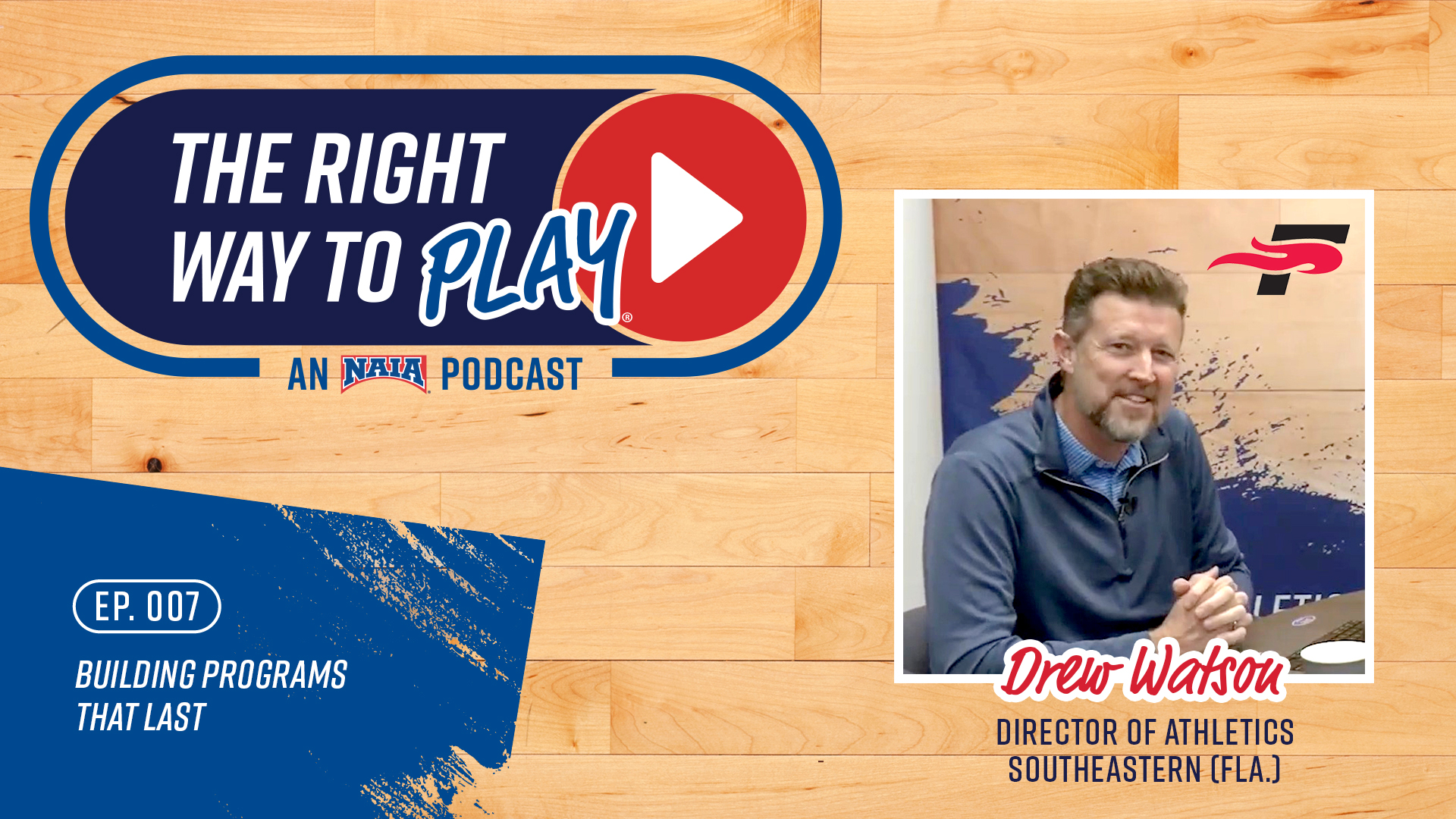


Building Programs That Last
In Episode 7 of The Right Way to Play Podcast, Southeastern's (Fla.) Director of Athletics, Drew Watson, shares how he’s built a culture that goes beyond winning seasons — focusing on long-term growth, institutional alignment, and character-driven leadership. From national success to mission-first decision making, this conversation is a blueprint for building it the right way.
Austin Bennett (00:17)
Welcome to the Right Way to Play podcast. No hype, no fluff, just real conversations about character driven competition and the future of college sports. Let's dive in.
Alan Grosbach (00:26)
If you want to understand what sustainable growth looks like in athletic departments, we've got your case study today. We've got Drew Watson, the Athletic Director from Southeastern University, joining us. Hey, guys. Under his leadership, he has more than tripled the size of the athletic department at Southeastern. They've won multiple national titles, multiple Sun Conference titles. He himself has been a national presence in the NAIA landscape. You've been the chair of the ADA. You've been heavily involved in NAC. You're involved in selection committees.
The list can go on and on, path forward, task force, believe, all those different things. And so you're obviously heavily involved in our association and you've done great things at your athletic department. So thanks for joining us.
Drew Watson (01:00)
Thank you. It's great to be here with you guys.
Austin Bennett (01:01)
Yeah, absolutely. So let's dive in. has sustained a lot of success over time, especially recently. How have you kept the mission of the university at the forefront while the elevation of your programs are going on?
Drew Watson (01:14)
You know, I think I think it's really about continuing to emphasize what we do. And what we do is as many athletic departments in the country do is it's we're really focused on three different areas. We're focused on the character development. We're focused on academic development and competitive excellence. I think, you know, when I first kind of laid out that vision as a AD at Southeastern, I literally had someone say, can't can't do all three. I'm like.
Yeah, I you can. exactly. And so I think it's really about continuing to emphasize those three things. And one that I've added over the years is you to be a team player. I think there's a lot of smart coaches who are good at what they do, who don't really do the team thing with their colleagues or the department.
and so I really think it's about, continue and emphasize what makes us who we are.
and, and that's really on me. You know, I've got to pay attention to the pulse of the department. ⁓ I can't get stuck in my office, ⁓ doing, doing different things. I try and set up a meeting. we, I meet with each coach on a regular basis and I've got to pay attention the times when, when kind of we've kind of drifted off mission.
is when I'm not paying attention. I'm not paying attention to coach who know, may have been really excited about working at Southeastern initially. I don't care about the budget. I don't care about the, you know, the limitations. I just want to be, I just want to be a head coach. And then years three, four, five hit and they're like, it grinds. And then all of a sudden their heart turns sour and, know, and the Bible says, of the heart, the mouth speaks. And if I'm not paying attention to that, if I'm not having conversation with coaches, mission drift is really, really possible.
Austin Bennett (02:50)
It's a great lesson.
Alan Grosbach (02:51)
So I want to talk about sustained success. You I think about some of the runs your baseball team has had the last few years and other programs come to mind, too. You you talked about culture and philosophy and those things that you could try to instill in your staff. How do you how do you prevent just kind of complacency? Like you think about like winning can breed to comfort at time from time to time and you just kind of get complacent and maybe you don't win at the same level. Have you have you challenged your coaches to continue to get better to? to think more intentionally and not have that kind of creep into the apartment.
Drew Watson (03:22)
I think complacency is easy to battle when you want when you give them enough scholarship not to really win the win the big game. But get close. Got it.
Alan Grosbach (03:31)
Right?
Drew Watson (03:32)
we have had some success, but it but you know, we have three you know, we've been in AI for 15 years, 16 years. We have three national titles as a team. We have a number of individuals in wrestling and track. But you know that in and of itself, you know, I think keeps people from being know, because we're not we're not sitting there looking at, you know, 25 national titles. We're not Jim Abbott down in Oklahoma City. Right. But but I think that really does keep people hungry for, know, for what we're chasing.
You know, and I would add this to that. I think, you know, coaches, if coaches feel like they're isolated. they feel like they're in their office grinding and nobody's with them. I think that can lead to some it can lead to some burnout, some lack of motivation. But I think if people feel like, you know, administration's on my side, Mr. Aces fight for me. the admin team provides this, this and this. always viewed my job as I'm a fullback and I'm Athletic Directors have to create holes in the line for coaches to sprint through. And if coaches don't feel that way, I think I think it leads to some you know, some complacency and I think it leads to some, you know, just like, man, I'm just in this, I'm in this by myself and I'm just going to kind of float along until, you know, I get another job and you know, we obviously don't want that.
Austin Bennett (04:46)
Talk to us and maybe this could be obviously what you guys do at Southeastern, but maybe a message to young ADs, any ADs out there in the NAIA. What do you believe the difference between a winning season is and then continue to build on a winning culture at Southeastern?
Drew Watson (04:59)
Yeah, I think that's a that's a good question. I think it really boils down to the people from the people that you hire. I think, you know, you can hire a coach. There's a lot of coaches are really good at what they do. They're good at coaching their sport. The good ones are really good at coaching a culture, building a culture in their program. You know, but you you always have you have coaches who, know, I think we're pretty good at hiring, but
But I'm not batting a thousand in my 15 years. You know, there's some, there's some hires that we've made that, you know, I looked at, I'm like, man, that was rushed. that was made with, with a, improper focus on priorities with that hire. you know, but, but when you look at coaches, hopefully at this level, they're good at what they do. hopefully they're building culture, but I think it takes a special coach to understand that it's not just about their team. It's about the, it's about the culture of the, of the athletic department.
They are an integral part of what we do. And know, when you have when you know, because it's easy to silo, right? It's easy as a coach. You're in the grind. You know, I got to win it. I got to win. got to win. And you don't really look up and you look around. And when you do that, you you says, man, I'm part of a broader culture. When you do that, it's a healthy culture. I would add this to that winning winning culture takes everyone. I think we tend to focus on the head coaches. Right. But you're.
Athletic Communication staff, your Athletic Trainers, your Admin Staff, your Admin Team. You know, if they're not bought in or on board, you really, you really don't have much there.
Austin Bennett (06:20)
One as an add-on to that, follow-up, if you will, we've heard that every now and then you'll be the team bus driver on road trips. So you talk about, you know, it's one thing to be the AD and kind of work from above, but you also are not afraid to get in there and do something that's maybe not glamorous. So tell us about how that's.
Alan Grosbach (06:33)
That is taking other duties as a sign to the next level. ⁓
Drew Watson (06:37)
And you know, it's it's funny because I take some some heat like ingest like people are like, you know, like, you know, I go to Kaiser's. So I was like, oh, did you drive the bus again? And it's like, you know, oh, yes, by the way, yes, I did. And I do think
Student Athletes and the Coaches need to feel like I'm in the fight with them. Yes, I'm not just sitting in our office. And so it's got a practical purpose. I mean, we have three CDL buses on campus and we have a limited amount of drivers.
But I've really made it a goal to try and get on the road with with with a team a year and so I try and get on the road with each of the teams That has never happened purely in a season in a year But it really gives me a different view on the coaches on the student athletes ⁓ I think it models servant leadership You know and I find out a lot about teams what you know, some teams get on the bus and never speak to me
And other other teams, you know, get off the bus and each each person says thank you. And I learned a lot about our men's basketball team. I drove them a couple of weeks ago to Warner and team gets off the bus and I heard the coaches go, Ok, we had two that time. I said to what he goes, we chart, thank you to the bus driver. We chart that in our team because it shows gratitude. It shows it shows who they are. He said after big losses sometimes, you know, this earlier this season, we had a.
be lost to Kaiser on the road. Only two of the guys thanked the bus driver. More thank yous and a win after and it provides a teaching moment for the coaches. But it's those kind of things that I learned. I've learned other things that aren't so good sometimes. Yeah. Yeah. That allowed me to to coach the coaches in a way that helps them grow. So, yeah, ⁓ and it's fun for me. It's a bit. Yeah, it's it's it's fun to hear the conversations and to talk to coaches.
get in the restaurant with the teams and just, you know, just talk.
Austin Bennett (08:15)
Well, even with your coaching background, it kind of puts you back into that without being all the way in. So, yeah, well, quick, quick plug then. If you're in the southeast and need a CDL license driver, see who's is available. reach out to Alan and Austin and we'll get you connected. We'll represent them.
Alan Grosbach (08:28)
That's the longest trip you've driven a team on. Do you mostly do it in conference or do you take them on some longer non-conference
Drew Watson (08:34)
you doing, Conference? I'm here today for the Women's Basketball Selection Committee. The last two years, I've driven our team to New Orleans from Lakeland, which is about a nine and half hour drive. So that is the longest I've gone.
Alan Grosbach (08:45)
right on. I don't think buses have DVD players anymore, but bring up the volume.
Austin Bennett (08:49)
Well, I think for a year or two of this podcast, maybe we do get a bus and Drew drives us around and we do podcasts on the bus. You know, I'm seeing college game day type things going on.
Drew Watson (08:58)
The heart, right? Right to the heart.
Austin Bennett (08:57)
We'll go right to the
Alan Grosbach (08:59)
Perfect. Okay, I'm gonna
way we're talking about athletic departments. You know, you and I have talked about this a little
the past that I kind of have this concept that running an athletic department is a little bit art and a little bit of science. We've spent a good amount of time kind of talking about the art, which is the people side, the culture side, the things like that. Let's talk a little bit about the science because you, as we mentioned kind of in your intro, you have had substantial growth to athletics, but it's also...
been intentional growth. so talk to us a little bit about like the framework you've used, how the NAIA has set you up well to do that, what has been your philosophy around growth, how have you worked with your administration? And I'm gearing these questions towards maybe a young Athletic Director that might be listening to the podcast that's interested in thinking about how they approach these same conversations.
Drew Watson (09:44)
it's tough because at a lot of our Institutions at this level, they're building based on it. They just need headcount. They need heads and beds. They're trying to add sports to better the bottom line. I've been really fortunate in that we typically don't do that. Now, there's been various Directors of Admissions who have called me, hey, when it's rugby, why don't we start?
You know, and it's like, you know, that I know our president, Dr. Ken Ingle he's he's he's a former sportscaster. He gets it. And, you know, I would just say we're blessed. Ok, so as we've grown from 130 athletes to 550 athletes, it's really been strategic on what fits Southeastern's mission and vision. And so when we look at it that way, there's not pressure to start sports that that don't really fit us. There were some.
There were some sports we started a few years ago that as of next year, we're not going to have some smaller sports. Esports is one that we're not going to have next year. When Esports was started, it was thought that it's going to bring in a lot of different types of students who don't play traditional athletics. But what we found is that it's really converting students already on campus to Esports, which is not what we started. And it's expensive.
And so we decide it's better to put those resources towards traditional sports. You know, but as we've started,
philosophy is if we're to start it, we're going to do it right. was our philosophy with football in 2014. We're not going to we're not going to start it asking a coach to recruit 225 athletes and we have 100 helmets. We're going to try and we're going to try and make sure that because what's that effect and effects the student athlete experience. Right. And I know a lot of people watching this ago must be nice for you.
You know, you're not in a spot where you've got to do a lot of developmental and you've got to, you know, start sports to keep the University alive. But that's that's really been our overarching philosophy is start start things that benefit the campus of South Eastern University and do so in a way that that promotes student athletes success. You know, and there is there are financials that added to that, of course, excuse me. But, you know, and we've got to look at things that make sense financially. You know, and I would say.
You know, we're at a good spot right now, but it's because we have an administration that believes that we, you know, The Right Way To Play on campus is making sure we have sports that we can support at that level.
Austin Bennett (11:57)
Awesome. that. Good transition to the next question. So about almost a year here in a month ago, the NAIA launched The Right Way To Play brand advocacy campaign at the convention in San Diego. When you hear The Right Way To Play, and now you've again, you've had 11 plus months now to sink it in and kind of formulate it to what works. What does that mean to you personally, and then also to Southeastern?
Drew Watson (12:17)
Well, I think, first of all, I think it's brilliant. I think in the landscape of college athletics, there's a lot of things going on that we all look at as people have been in athletics for years and go, what the heck is going on? And so like to to market who we are as athletics, the way it's always been.
athlete focused athletics is is spot on. And I commend Jim Carr in the national office for for landing on that.
What it means to me is it's athletics that's free of the influence, ⁓ tremendous influence of the transfer portal and unhealthy NIL. We have that, but it hasn't gotten to the point where it's out of
I think schools aren't overregulated. We haven't been corrupted, as it were, by the multi-million dollar TV deals. so when you look at
how athletics was being played 30 years ago and really put out there for student athletes, student athlete experience or that. Now, that may lead some people to go, well, they're backwards or they're, you know, they're old school. Like they're not up to date. You know, that couldn't be further from the truth. I think we're more forward thinking than ever. I mean, you've got adjustments to championships that you're making. The ROA our way. You've got Path Forward Task Force. You've got
kind of a new look at selection committees. You've got all this stuff that we're doing that says we're forward thinking. And so if somebody is going to sit there and criticize us because we're old school, yeah, I think we're going to own that. We're proud of that. You know, but we're also forward thinking. mean, this podcast is an example of that. We would have never done a podcast 10 years ago. But you look at the space and go, what's the best way to get our message out there? It's the podcast space. Yeah. Now, some people may say we need new hosts
Alan Grosbach (13:55)
And I would agree wholeheartedly, but...
Austin Bennett (13:58)
Got a lot of pictures to change, that's okay. I'm sure we have the money to do that.
Drew Watson (14:01)
forward thinking, you know? And, you know, I think it's it's great that you're you're trying to get the message of who we are out there this way.
Alan Grosbach (14:08)
Yeah, know, Austin, I think that's a perfect segue into our Fast 5 lightning round.
gonna lighten things up a little bit. We're gonna talk a little bit
less serious stuff. So we're gonna throw some quick hit questions at you. Now, I will warn you.
Austin Bennett (14:22)
One to two word answers, three max.
Alan Grosbach (14:24)
These have become moderate to slow fives often. And so we're trying to keep these fast fives. So don't overthink it. First gut, first gut action or first gut reaction, I should say. First question, what's something about you that would surprise your student athletes?
Drew Watson (14:38)
man. That's a good question.
Alan Grosbach (14:39)
We're already into a moderate five.
Austin Bennett (14:41)
You like to garden
Drew Watson (14:42)
I like to grow things. like to do that kind of stuff.
Alan Grosbach (14:45)
Are we talking like plants or vegetables or both? Both. Both.
Drew Watson (14:49)
or vegetables. Yeah, you when I was when I was 12, I planted a garden outside little garden. I was grew tomato plants. I know. no.
Greenhouse in the back of a bus. Right. Perfect mix for.
Austin Bennett (14:56)
The show just got even better on the road.
Alan Grosbach (15:02)
We're gonna have to unpack that offline because I'm really I've got a follow-up question
Austin Bennett (15:06)
Yes, easier to grow a cucumber or an athletic sports team, which one? Okay, who would you want to play you in a movie?
Alan Grosbach (15:11)
Exactly.
Drew Watson (15:14)
George Clooney.
Alan Grosbach (15:15)
I was actually thought that too.
Drew Watson (15:18)
You get Blake Shelton a lot. I could see that. I could have seen that. I could have said that. But I'd say George Clooney.
Alan Grosbach (15:25)
What's your favorite golf course that you've played? Living in Florida, golf course, Mecca.
Drew Watson (15:29)
You know, no, I've been blessed to play some really nice golf courses and I would say my favorite has been Kapalua in Hawaii. Very cool. It's a longer story than that, but it's a blessing to be able to do that. yes.
Alan Grosbach (15:36)
right on. Yeah.
Austin Bennett (15:42)
Quick follow-up, handicap, what's your handicap?
Drew Watson (15:44)
It's like 18. I lose a lot of time.
Austin Bennett (15:46)
That's my guy. We could play any time together. Alan's really like 15, but he claims to be a lot better than that. just be wary if you do play with him.
Alan Grosbach (15:57)
Why? Why'd we have to go there? We were having a nice conversation. we're into a slow five now. We gotta keep it rolling.
Austin Bennett (16:04)
What's your most overused phrase or often used phrase in the office?
Alan Grosbach (16:08)
Like what would Britney say you say a lot?
Austin Bennett (16:10)
we may or may not already have the answer to this.
Drew Watson (16:11)
Recently it's been, there's a, this is something I got from another AD. There's a pain that hurts and there's a pain that changes. That's one of them, but it's probably something along the lines of gratitude, gratitude, gratitude, gratitude. Because I, that's my pet peeve. People who walk around entitled and I think we get that a lot in athletics. Where you walk in in the registrar's office, like, yeah, I need this. Well, no, like walk in with humility and gratitude.
Austin Bennett (16:35)
Great message.
Alan Grosbach (16:36)
Okay, we may know the answer to this, but if you're not being athletic director, you're being what?
I was gonna guess bus driver, but I don't know that that's.
Austin Bennett (16:43)
I would avid fan. I follow him on Twitter. Always reposting and sharing stuff about what they do on campus. So fan, etc.
Drew Watson (16:50)
I think that I would like and you'll probably laugh at this because you experienced this from me. I think attorney would yes Yeah
Alan Grosbach (16:58)
Okay.
Austin Bennett (16:59)
litigation.
Drew Watson (16:59)
Now has anyone ever brought fast fives for you? No. No.
Austin Bennett (17:05)
We've answered them every now and then with some guests.
Alan Grosbach (17:07)
Do you got a couple?
Drew Watson (17:07)
No, no, I mean, I just wonder like you're always the guys asking the questions. Has anyone like turned the tables on you?
Austin Bennett (17:14)
No, because I don't think we're important enough. The guest is who people want to hear from.
Drew Watson (17:17)
Guys, you're important. No.
Alan Grosbach (17:18)
Thank you.
Austin Bennett (17:20)
Yeah, can you look in the camera and say...
Drew Watson (17:22)
These are important. Look at them.
Alan Grosbach (17:26)
Okay, well on that note, let's get into kind of just Austin our walk-off moments. You know, we've had a great conversation with Drew today. Drew, we so appreciate you coming in and visiting with us and obviously your role in the selection committee
big time and it really matters and so we appreciate how serious you take it and your commitment to the NAIA 100%. Austin, what are you thinking?
Austin Bennett (17:42)
Alan, think my walk off moment would be, I think it's gratitude. We just heard it a second ago, but I think it's how Drew leads with gratitude and how that I've interacted with a lot of people on campus at Southeastern. You can kind of start to see that, you know, kind of umbrella down over the top. And I think the pride that they show down there for how they've built sports and started sports. And, you know, he's talked about football since they started that back in 2014. Obviously a playoff win this past year, making the playoffs. It's exciting to see the growth overall of that institution and the strength of that institution. So.
Gratitude with with a little bit of pride mixed in there is really my walk-off
Alan Grosbach (18:13)
moment. Yeah, the word that I can't get out of my mind right now is just intentional. It seems like Drew, your leadership is just really intentional and everything that happens at Southeastern is really intentional. And I mean that with real positive intent, like the culture is intentional, new sports are intentional, the student athlete experience is intentional. And I just think that that is a really interesting and strong way to think about leadership and to think about how you run an intercollegiate athletics department, especially in kind of the small college environment that we live in on a day to day basis.
Drew Watson (18:40)
I appreciate that guys. It means a lot to me.
Austin Bennett (18:42)
Well, college athletics is at its best when it builds more than wins. Thanks for being a part of the conversation. Share with us, reach out to us with ideas of future guests or topics, anything like that. But as always, keep playing the right way.
Alan Grosbach (18:53)
And be sure to follow or subscribe you don't miss the next conversation.